
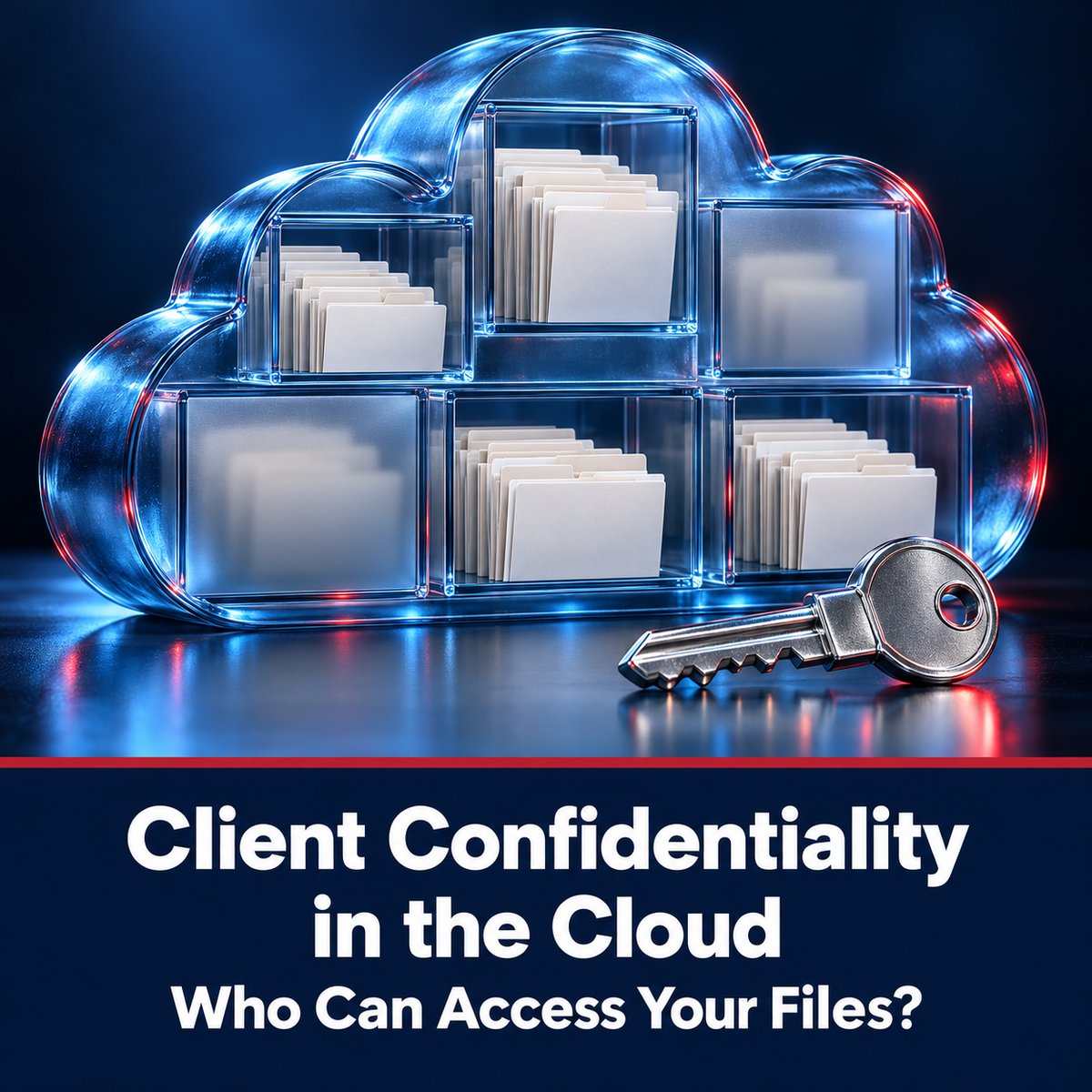
Most firms have moved at least some case files to the cloud, often without a formal decision ever being made about it - a partner starts using a convenient tool, and within a year it's quietly holding privileged client information. That's worth pausing on, because cloud storage isn't inherently risky, but it is only as safe as the specific choices behind it.
Convenience Isn't the Same Question as Confidentiality
A cloud storage tool can be fast, easy to share from, and accessible from anywhere - all genuinely useful for a law practice. None of that tells you anything about whether the tool is actually appropriate for privileged client information. Those are two separate questions, and it's common for a firm to have answered only the first one.
What Actually Matters for Client Confidentiality
- Where the data is actually stored, and whether the provider's terms allow them to access or use it for any purpose beyond storage
- Whether access is restricted by matter, so staff only see the client files relevant to their own work
- Whether data is encrypted both while being transferred and while sitting in storage
- What happens to firm data if the firm ever stops using that provider - is it portable, or effectively held hostage
- Whether the provider has had past security incidents, and how they were disclosed and handled
A consumer-grade file-sharing tool and a platform built for regulated, confidential data can look identical from the login screen. The difference only shows up when you ask these specific questions.
The Access Problem Firms Often Miss
Even with a secure storage platform, a firm can undermine its own confidentiality by configuring it loosely - shared logins, folders open to the entire firm regardless of matter, or links set to "anyone with the link" rather than specific people. The platform isn't usually the weak point. How it's configured, day to day, generally is.
A Reasonable Standard to Apply
Before trusting a cloud platform with client files, a firm should be able to answer, specifically: who can see this data, where does it live, and what happens if something goes wrong. If those answers aren't clear, that's worth resolving before more client data moves into the tool - not after.
Frequently Asked Questions
Is cloud storage inherently less secure than keeping files on an in-office server?
Not inherently - a well-configured cloud platform can be more secure than an aging on-site server with no redundancy. The determining factor is the specific provider, its configuration, and how access is managed, not whether the data happens to be local or cloud-based.
How do we find out if our current cloud storage tool is actually appropriate for client data?
Start with the provider's own terms around data use, encryption, and access controls, and compare that against what's actually been configured in your firm's account. A short outside review can usually answer this quickly if it isn't clear from the documentation.
What's the biggest confidentiality mistake firms make with cloud storage?
Loose access configuration - shared folders open firm-wide regardless of matter, or sharing links set broader than necessary. The underlying platform is usually fine; how it's set up day to day is where problems creep in.
Should every firm use the same cloud storage platform?
Not necessarily. The right choice depends on what a firm already uses for practice management, how its matters are structured, and its specific confidentiality requirements - but the questions worth asking are the same regardless of platform.
Next Step
If you'd like a plain, specific look at how your firm's current setup actually stacks up, we offer a 15-minute call to see if we're a fit. No pitch, no obligation.
Managing partners and office administrators can reach us at 325-643-8184 or through the contact form at apollocomputers.com.