
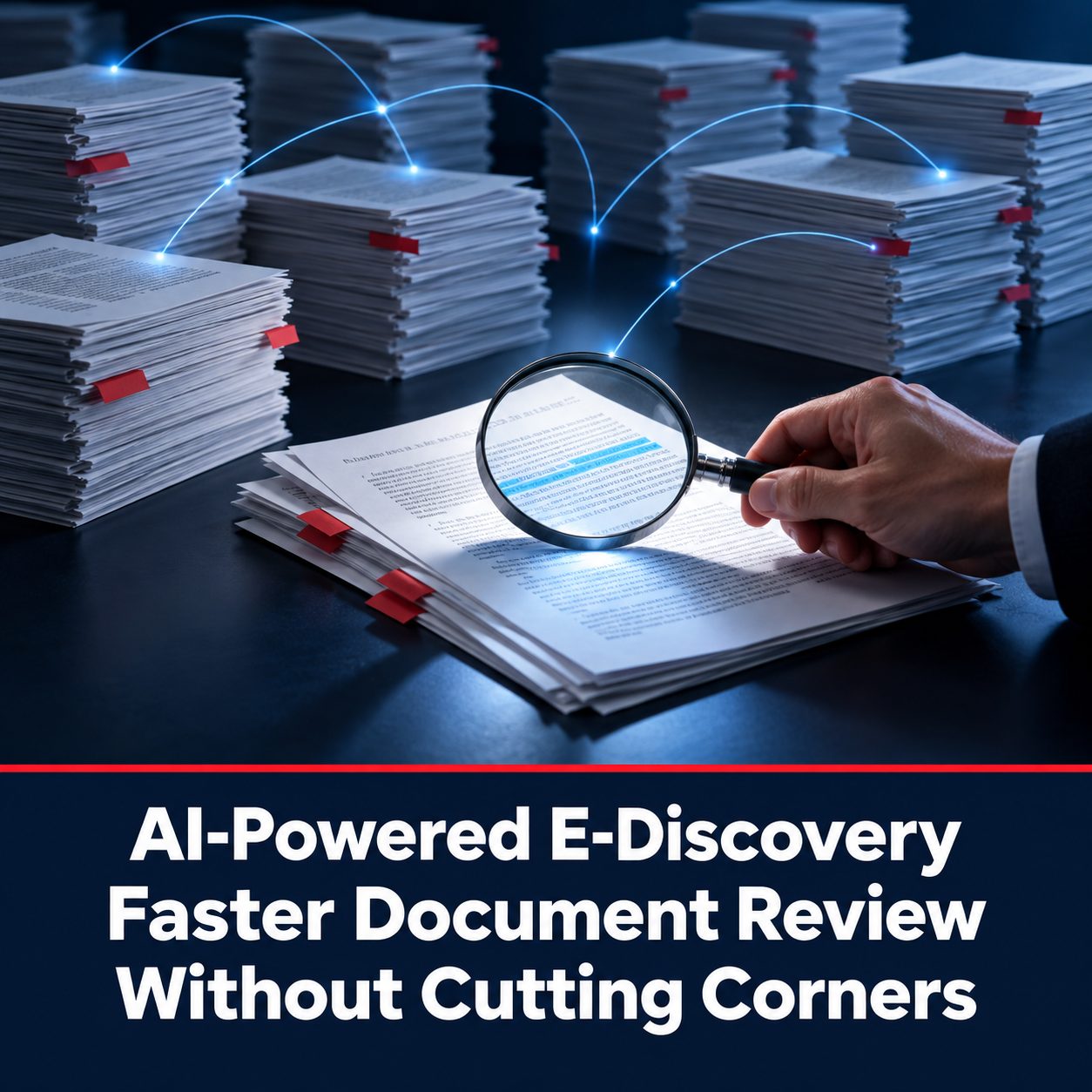
Document review is one of the most expensive parts of litigation, and it is where AI has made the most visible inroads. Tools can sort thousands of documents, surface the ones that matter, and summarize what is in them. For a small firm facing a large production, the promise of finishing the work faster is a serious one.
The same speed that makes these tools attractive is also what makes them easy to misuse. A firm that adopts one should be clear about what it is relying on and what it still has to check.
What AI Is Doing in Discovery
Technology-assisted review has been part of e-discovery for years. A reviewer codes a sample of documents, the software learns from those decisions, and it ranks the rest by likely relevance. Newer generative AI features add to that by summarizing documents, answering questions about a collection, and flagging likely privileged or sensitive material.
Courts have accepted technology-assisted review where it is properly validated, and parties increasingly address it in their agreements on how electronically stored information will be handled. The tools are not novel to the legal system. What is new is how quickly they have become available to firms of every size.
Where the Time Savings Come From
The gains are real when the tool is used for the work it suits. Sorting a large collection so that attorneys look at the most relevant material first, identifying near-duplicates, grouping related documents, and producing first-pass summaries all reduce the hours spent on documents that never matter. That frees attorney time for the judgment calls that do.
Where Corners Get Cut
Speed creates temptation. The risks in an AI-assisted review tend to be the same few:
- Treating the tool's ranking as the answer rather than as a way to prioritize human review
- Skipping validation, such as sampling the documents the tool set aside to confirm that relevant material was not missed
- Relying on automated privilege flags without attorney review, where one error can mean producing a protected document
- Failing to document the process, which matters if the other side or the court questions how the review was done
- Using a summary as a substitute for reading a document that turns out to be important
Courts and opposing counsel care less about whether AI was used than about whether the process was reasonable, documented, and supervised by an attorney.
Protecting the Data While It Is Under Review
Discovery material is often among the most sensitive a firm handles. It can include a client's internal communications, personal information about third parties, and documents covered by protective orders. Loading it into an AI review platform places it in a vendor's environment, which raises the same questions as any other confidentiality decision:
- Where the data is hosted, and who at the vendor can access it
- Whether it is used to train the vendor's models or retained after the matter ends
- How access is limited to the people who work on the matter, and whether activity is logged
- How documents are transferred in and out, and what happens to the data when the case is over
- Whether any protective order or client agreement restricts where the material may be sent
Some of these questions are for the attorneys, and some belong with whoever manages the firm's technology. They are best settled before the data is uploaded.
A Reasonable Approach
Firms new to AI-assisted review usually do best by starting with a defined, lower-stakes matter, agreeing the process with the other side where possible, and keeping a written record of how the tool was configured and checked. Using a tool through a platform the firm has already vetted is a better starting point than letting an individual attorney pick one for a single case. The firm's counsel should decide how to handle privilege protections and any court orders that apply.
Frequently Asked Questions
Is AI-assisted document review accepted by courts?
Courts have accepted technology-assisted review when the process is reasonable and validated. What matters is that the methodology is documented and supervised by attorneys, not simply that a tool was used.
Can AI decide which documents are privileged?
It can flag likely privileged material to help prioritize review, but an attorney should make the final determination. A missed privileged document can be difficult to correct once produced.
What should a firm confirm before uploading discovery material to an AI platform?
Where the data is stored, who can access it, whether it is used for model training, how long it is retained, and whether any protective order or client agreement limits where the material can go. These should be settled before the upload.
Does using AI for e-discovery reduce the need for attorney review?
It changes where attorney time goes, but it does not remove it. Attorneys still validate the results, review privilege calls, and read the documents that matter to the case.
Should the firm tell the other side that it is using AI in discovery?
That depends on the court's rules, any agreement on how electronically stored information will be handled, and the facts of the matter. The firm's attorneys should decide, and many choose to address the methodology in an agreed protocol.
Next Step
If your firm is considering AI for document review and wants to understand where the data would live and who could see it, we offer a 15-minute call to see if we're a fit. No pitch, no obligation.
Managing partners and office administrators can reach us at 325-643-8184 or through the contact form at apollocomputers.com.